The B2B Platform Built for How Packaging Actually Sells
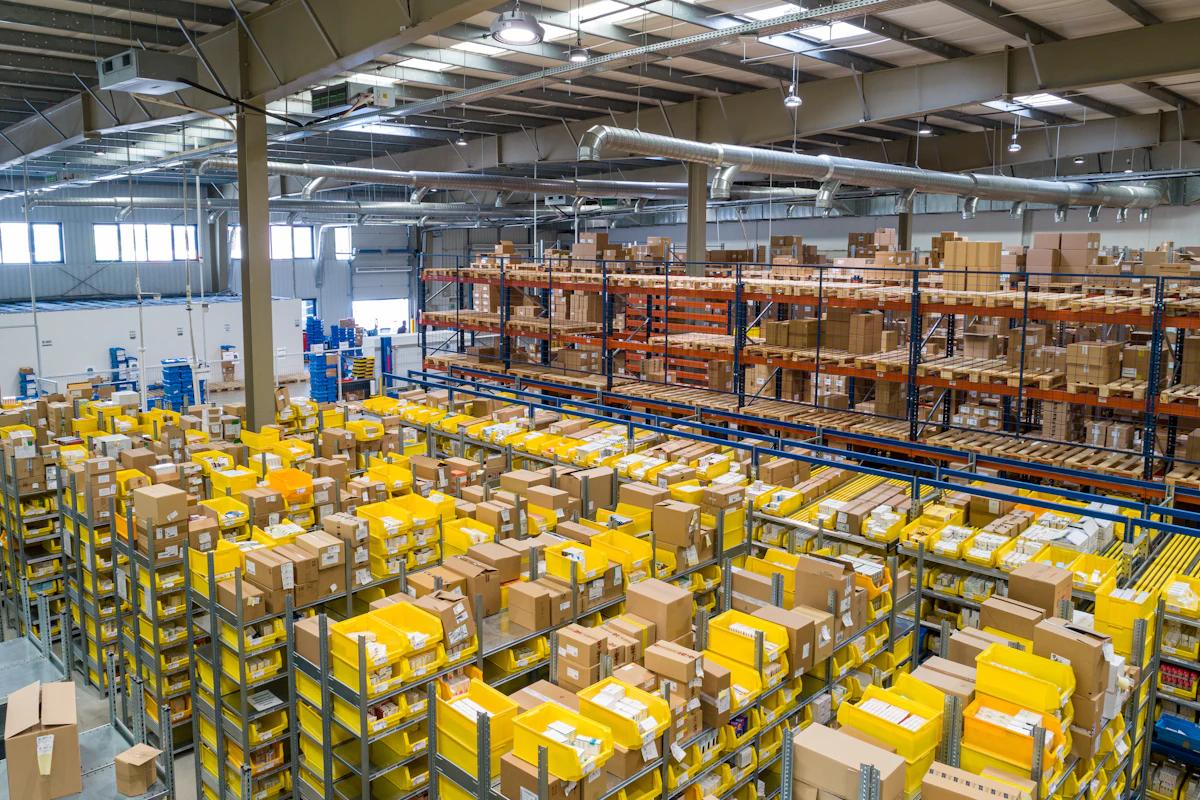
Selldi is an all-in-one B2B and B2C platform for packaging wholesalers and distributors. It handles the details that break generic systems, selling by piece, inner, carton or pallet with minimum order quantities and multiples, per-customer contract pricing, credit terms, quick reorder lists and recurring supply schedules, plus an AI Email Reader that turns emailed and attached orders into ERP records. It runs multi-currency and multi-language for cross-border EU trade, connects to any ERP via API, and adds a B2C storefront for smaller buyers on the same shared catalogue and stock.
It is 8:40 on a Tuesday and the fulfilment buyer at a fast-growing e-commerce brand needs boxes. Not a decision, not a quote, just the same mailer carton she buys every fortnight, plus the paper void fill and the branded tape. She knows the codes by heart. What she cannot see is whether the price still matches what her account manager promised in spring, whether she is ordering in cartons of 250 or accidentally in singles again, and whether the pallet clears before her Black Friday inbound. So she does what half your customers do: she emails your rep three lines and waits.
Multiply that buyer by four hundred and you have the daily reality of a packaging wholesaler. The catalogue is enormous, the same item sells in four pack sizes, every customer has their own negotiated price, and much of the revenue is the same boxes going to the same people on a predictable rhythm. Generic commerce software was built to sell one shirt to one shopper, not this. Below is what a platform designed around packaging distribution has to get right, and where it honestly suits you or not.
The unit problem is the whole problem
Ask any packaging distributor where orders go wrong and the answer is units. Stretch film sells by the roll, the box of six, and the pallet of 48 boxes. A cup sells by the sleeve of 50, the case of 1,000, and the pallet. If your ordering screen shows one price and one quantity field, someone types 6 meaning six cases and receives six rolls: a credit note, a re-delivery, and a phone call that starts with an apology.
Selldi models the packaging hierarchy directly: piece, inner, carton, pallet, with the conversions defined once on the product. A customer buying stretch film sees that a carton is six rolls and a pallet is 48 cartons, chooses the level they actually order in, and the system does the maths. Minimum order quantities and multiples are enforced at the same layer, so a line that ships in multiples of 250 will not accept 300. The buyer is corrected before checkout, not after the forklift moves.
Every customer, their own price
In packaging, list price is a starting point nobody pays. The e-commerce brand on 40,000 mailers a month is not on the same sheet as the caterer buying a few cases of takeaway trays. Contract pricing, tiered breaks by volume, project prices for a seasonal run, all of it lives per customer. When those prices sit in spreadsheets and your rep's memory, the online channel becomes a liability, because a wrong price shown is worse than none.
On Selldi, price is resolved per logged-in customer against the rules your team already agreed. The buyer logs in and sees her price, her breaks, her currency, not a public rate she then argues down. Because the storefront, rep tools and back office share one source for products, stock and pricing, there is no second copy to drift out of date. What the rep quotes and what the site shows are the same number, the only version of an online channel a distributor can trust.
Credit terms, because packaging runs on account
Wholesale packaging is an account business. Established customers buy on terms, against a credit limit, and expect to see their balance and overdue position without ringing accounts. A consumer checkout that only takes a card is useless to them. Selldi supports account customers with credit terms and limits surfaced in the panel, so a buyer orders on account inside their agreed ceiling and finance is not chasing surprises. New or unvetted buyers can still be pushed to prepayment, which keeps risk where it belongs.
The reorder is the product
For most packaging accounts, the interesting sale happened once. Everything after is repetition: the same box, the same fill, the same tape, on the same cadence. If your platform makes a repeat buyer rebuild that basket from a 4,000-line catalogue every time, you have made your easiest revenue tedious to collect.
Selldi treats repetition as a first-class feature. Quick order lists let a buyer key or paste codes and quantities and drop a whole standing order into the basket in seconds. Saved lists hold each customer's regular kit. Recurring orders run on a schedule, so the fortnightly mailer top-up or the weekly HoReCa tray delivery repeats without anyone re-typing it, with the buyer still able to adjust before it goes. This is the difference between an account that self-serves and one that lives in your reps' inboxes.
RFQ for the jobs that are not off-the-shelf
Not every packaging enquiry has a price yet. A custom-printed carton run, a new pallet configuration, a one-off protective insert, these start as questions. Selldi includes a request-for-quote flow: a customer asks for pricing on a specification from the catalogue, your team responds with a quotable offer, and the accepted quote converts into an order on their account. The negotiation that used to scatter across email threads stays attached to the customer and the product.
The order that arrives as an email
Here is the part packaging distributors rarely admit out loud: a large share of orders never touch any portal. They arrive as an email that says "same as last month plus two pallets of the 80-micron film," as a PDF purchase order, or as an Excel sheet a procurement system spat out. Someone reads it and retypes it into the ERP, and that person is your bottleneck, your typo risk, and your single point of failure on holiday.
Selldi's AI Email Reader takes those messages, PDFs and spreadsheets and turns them into structured orders in your ERP, matching codes, quantities and pack levels rather than making a human rekey them. It does not force your email-first customers onto a habit they never asked for. It removes the retyping between their message and your system. For a packaging business where the biggest accounts are often the ones most wedded to "just email us," that is where the hours hide.
Two counters, one warehouse
Packaging demand is not purely wholesale. The market stall, the small bakery, the craft seller buying a few hundred boxes, these are real orders that do not justify an account and a rep. Turning them away sends margin to marketplaces. Running a second, disconnected shop creates a second stock figure that lies.
Selldi runs a B2C storefront on the same shared catalogue, stock and product data as the B2B side. Smaller buyers self-serve at retail terms and pay up front, your account customers get their contract prices behind login, and both draw down from one warehouse. You capture the long tail without reconciling a separate system, and without a small buyer ever seeing your key account's pricing.
Selling across the border, and around the rules
Packaging is cross-border by nature: a pallet of film costs roughly the same to make in one EU country as the next, and the competition is regional. Selling into neighbouring markets means invoicing in the local currency and speaking the buyer's language, not making a German procurement lead navigate a Polish-only checkout. Selldi runs multi-currency and multi-language across the EU and connects to any ERP via API, SAP, Microsoft Dynamics or NetSuite, so an export order lands in your books the same as a domestic one.
Sustainability is quietly becoming a spec question rather than a marketing line. EU packaging rules and buyers' own reporting are pushing recyclable materials up the priority list, and a customer increasingly wants to reorder the exact recyclable option they qualified. Because Selldi carries product attributes on the shared catalogue, you can present and reorder those variants deliberately, done honestly rather than greenwashing a range.
When this is not the right fit
A platform this specific is not for everyone. If you sell packaging almost entirely through one or two national retail chains on EDI, your integration lives in that pipe and a self-serve portal adds little. If your catalogue is a few dozen commodity lines at one public price with no accounts, no credit and no per-customer deals, a simpler shop will serve you and this is more machine than you need. If your business is bespoke design and manufacturing where nearly every job is quoted from scratch, you want a quoting and production tool first, with the storefront as a thin front end.
Selldi earns its place when you have a real catalogue with genuine pack hierarchies, account customers on individual prices and terms, a steady drumbeat of reorders, and enough email-and-spreadsheet ordering that a person is retyping it. That is the shape of most packaging wholesalers, which is exactly who it was built around. The way to know is a demo on your own products and pack sizes, offered on subscription or licence, so you watch a real reorder and a real emailed PO flow through before you commit.
Frequently asked questions
Can it sell the same product by piece, carton and pallet?
Yes. Selldi models the packaging hierarchy of piece, inner, carton and pallet with the conversions set once on the product. The customer picks the level they order in and the system handles the maths, so a carton of six rolls or a pallet of 48 cartons is never mistaken for singles.
Does it enforce minimum order quantities and multiples?
Yes. MOQs and order multiples are enforced at the product level, so a line that must ship in multiples of 250 will not accept 300. The buyer is corrected at the basket rather than after dispatch, which removes a common source of credit notes and re-deliveries.
How does per-customer pricing work?
Price is resolved per logged-in customer against the contract prices, volume breaks and project rates your team already agreed. Because the storefront, rep tools and back office share one source for products, stock and pricing, the number the rep quotes and the number the site shows are the same.
Can regular customers set up recurring packaging orders?
Yes. Quick order lists let buyers paste codes and quantities to rebuild a standing order in seconds, saved lists hold each customer's regular kit, and recurring orders run on a schedule so fortnightly or weekly supply repeats without re-typing, with the buyer able to adjust before each run.
What happens to orders that still arrive by email or PDF?
The AI Email Reader turns emailed messages, PDF purchase orders and Excel sheets into structured orders in your ERP, matching codes, quantities and pack levels instead of having a person rekey them. Email-first customers keep their habit while you lose the retyping.
Does it handle cross-border EU sales?
Yes. Selldi runs multi-currency and multi-language across the EU and connects to any ERP via API, including SAP, Microsoft Dynamics or NetSuite, so export orders in a buyer's local currency and language land in your books the same way domestic ones do.