What B2B Buyers Expect From Their Suppliers in 2026

In 2026 B2B buyers expect their suppliers to feel like the shops they use in their private life: log in, see their own negotiated prices without asking, check what is actually on the shelf, place an order at nine in the evening from a phone, and follow its status without calling anyone. This is the consumerization of B2B buying, and it is driven by a simple fact: the person sending you a purchase order is the same person who reordered dog food on their phone last night. Selldi is an all-in-one sales system for wholesalers and distributors built around exactly these expectations, combining a B2B portal, a B2C store on the same catalogue, a field-rep CRM, the central offer and channel hub CENTER, an AI Email Reader and ERP integration. The suppliers who meet these expectations keep their customers; the ones who still run everything through phone and email are quietly losing orders they never see. None of this requires reinventing your business. It requires giving buyers the self-service they already assume they will get.
The buyer at home and the buyer at work are the same person
Think about how a purchasing manager spends a normal evening. They order groceries for delivery, book a table, track a parcel down to the street it is on, and pay for all of it in a few taps. Nobody phones a call centre to ask whether an item is in stock. Then they come to work the next morning, need forty line items from a wholesaler, and the process is: dig out last month's PDF price list, hope it is still current, type an email, and wait for someone to confirm whether half the products are even available. The gap between those two experiences is glaring, and buyers feel it every single day.
This is what analysts mean by the consumerization of B2B. The habits people build as consumers become the baseline they expect everywhere. Industry research through 2025 and into 2026 keeps pointing the same way: self-service is no longer a nice extra, it is the default, and a large share of buyers say they would move to a different supplier for a better buying experience. You do not need a percentage to feel this. You need to watch one impatient buyer abandon a phone order because they were put on hold, and place it with whoever let them do it themselves.
The generational shift nobody warned you about
There is a quieter change underneath all of this. The people making purchasing decisions are turning over. The buyers who were comfortable with a fax machine and a long-standing rep relationship are retiring, and the ones replacing them grew up digital. They do not see a phone call as service; they see it as friction. They assume that if a supplier is serious, there is a portal, and if there is no portal, the supplier is behind. A younger buyer will often research, compare and decide before they ever speak to a human, and they judge you on whether your ordering experience respects their time.
That does not mean relationships stop mattering. It means the relationship now sits on top of good self-service, not instead of it. Your best customers still want to talk to a rep about a big order or a special situation. They just do not want to talk to anyone to reorder the same twelve pallets they buy every month. The supplier who forces a conversation for the routine and saves the human for the exceptional is the one who feels modern.
What buyers actually expect, in concrete terms
Strip away the jargon and the list of expectations is short and specific. Buyers want to see their own prices the moment they log in, because the price is theirs and asking for it every time is insulting. They want to know whether something is in stock right now, not "probably" or "let me check and call you back". They want to order outside your office hours, because their day does not end when yours does, and they want to do it from a phone in a warehouse aisle as easily as from a desktop.
- See account-specific pricing at login, including the right currency for their market, without emailing for a quote.
- Check live stock levels before ordering, so a confirmed order does not turn into an apologetic phone call two days later.
- Place and repeat orders 24/7 from any device, including a fast reorder of a previous basket.
- Follow order status themselves, from confirmed to shipped, with a tracking link instead of a chase call.
- Download their own documents, pro-forma and invoices, without asking accounts to resend anything.
Notice that none of these are exotic. Every one of them is something the same buyer already gets from a consumer app. What makes them hard for a traditional wholesaler is not the buyer's demand, it is that meeting the demand means your prices, stock and documents have to live in one connected system instead of scattered across spreadsheets, an inbox and someone's memory.
A day in a wholesaler still running on phone and email
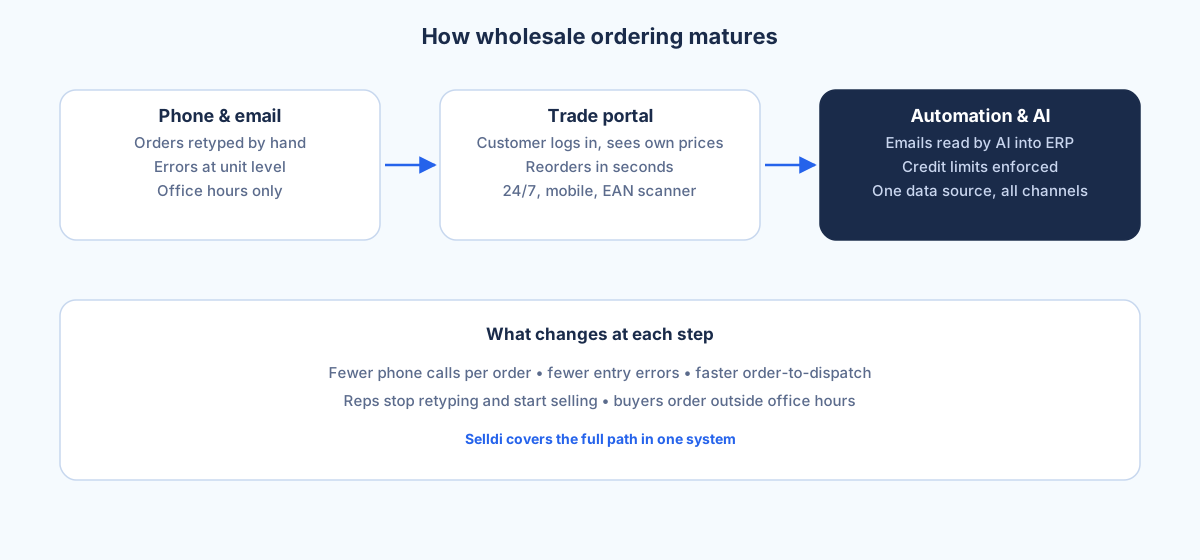
Picture the counter on a busy morning. Three people are on the phone taking orders, reading product codes back and forth, correcting mistakes. An email lands with an order buried in the middle of a paragraph, and someone has to retype it into the system by hand, hoping they read "CEM-32-25" and not "CEM-32-15". A rep is out on the road and phones in to ask whether a customer has hit their credit limit, and nobody can answer quickly. Meanwhile a good customer, who wanted to place an order at eight in the evening, simply went to a supplier whose portal was open.
Every one of those moments is a cost, and most of them are invisible on the P&L. The retyped order that went wrong becomes a return. The buyer who could not self-serve becomes a lost line you never counted. The rep's phone call to check a credit limit is fifteen minutes that produced nothing. The teams doing this work are not slow or careless; they are doing manual work that the buyer now expects to be automatic.
What this means for how you sell
Meeting these expectations is less about buying software and more about closing the gap between how your customers already buy in their lives and how you make them buy from you. A B2B portal that shows each customer their own prices and live stock turns the routine reorder into self-service and frees your people for the conversations that actually need them. A mobile experience, including scanning an EAN barcode with a phone to add a product to a basket, matches the way buyers move around a warehouse. Order statuses and downloadable documents remove the chase calls. And an AI Email Reader that pulls an order straight out of a customer's email into your system means you can still serve the customer who insists on emailing, without a person retyping it.
This is the design Selldi is built on: one catalogue serving a B2B portal and, where it makes sense, a B2C store; a field-rep CRM so the person on the road can see the same account, prices and limits as the counter; and ERP integration through an API to whatever system runs your back office, including SAP, Microsoft Dynamics 365 and NetSuite, so stock and documents stay in sync. The point is not the feature list. The point is that the buyer stops noticing the mechanics and just gets what they wanted.
When staying on phone and email still makes sense
Honesty matters here. If you have a handful of long-standing customers, a simple product range, and everyone involved genuinely prefers the phone, a portal can be effort you do not need yet. Some trades really do run on relationships and negotiated one-off deals where every order is different, and a self-service catalogue adds little. If your volume is low and stable, and you are not trying to grow or win younger buyers, the cost and change of moving may not pay back soon.
But be clear about what you are choosing. Staying manual is a decision to compete on relationship alone, against suppliers who offer the relationship and the self-service. That works until a competitor opens a portal to your customers, or until the buyer who liked the phone retires and their replacement quietly moves the routine orders elsewhere. The right time to look is before that happens, not after.
If you want to see what "the same experience the buyer expects at home" actually looks like for a wholesaler, the simplest next step is to click through a working example rather than read another list, and you can do that in the live demo at demo.selldi.pl/showcase.
Frequently asked questions
What does consumerization of B2B mean for wholesalers?
It means business buyers now expect the same ease they get from consumer apps: self-service ordering, their own prices at login, live stock, 24/7 access and order tracking. The same person who reorders groceries on a phone at home expects to reorder pallets the same way at work. Wholesalers who match that keep customers; those who stay on phone and email lose orders they often never see.
Why do B2B buyers want to see their own prices without asking?
Because the price is already theirs, negotiated for their account, so asking for a quote every time is friction with no value. Buyers expect account-specific pricing, in the right currency for their market, to appear the moment they log in. A platform like Selldi shows each customer their individual prices automatically, which removes a whole layer of back-and-forth email.
Is a customer portal really necessary, or is phone and email enough?
For a small, stable set of relationship-driven customers who genuinely prefer the phone, manual ordering can still be fine. But most buyers, especially younger ones, now treat a portal as the baseline sign of a serious supplier. Phone and email work until a competitor offers self-service to the same customers, at which point the routine orders quietly move.
How can I keep serving customers who insist on ordering by email?
You do not have to force them onto a portal. An AI Email Reader, like the one built into Selldi, extracts the order from the customer's email and puts it into your system without a person retyping it. That removes the manual work and the retyping errors while letting the customer keep the channel they prefer.
What is the generational shift in B2B purchasing?
The buyers who were comfortable with fax and long rep relationships are retiring, and their replacements grew up digital. Younger buyers often research and decide before speaking to anyone, and they see an unnecessary phone call as friction rather than service. Relationships still matter, but they now sit on top of good self-service instead of replacing it.